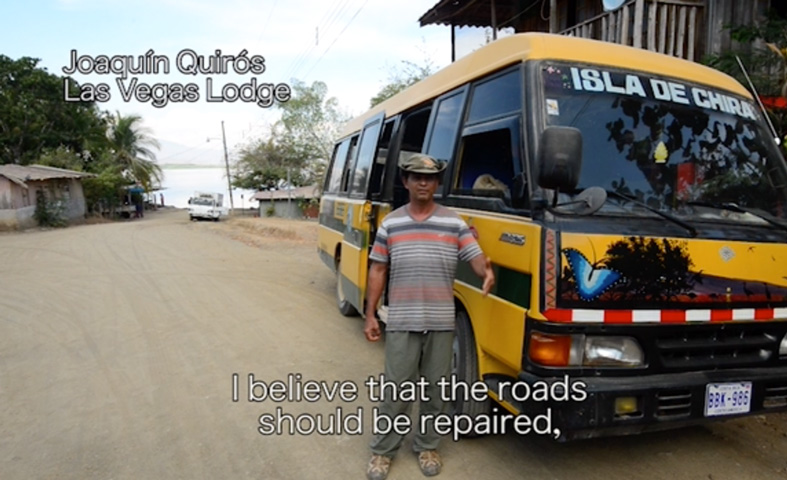
Welcome to Chira Island

THE CHIRA PROJECT
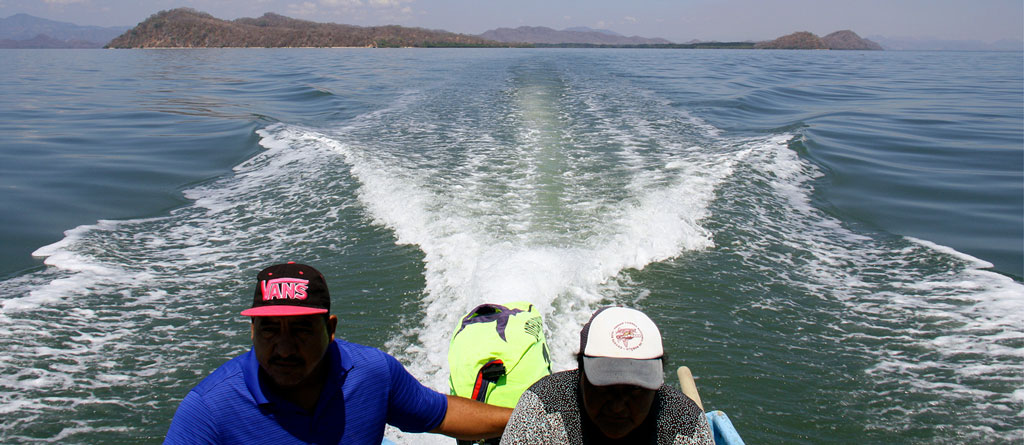
A-01 - A Company / A Foundation + Bill Price - School of Architecture PVAMU

Permanent Impermanence

The Chira Project is a multidimensional project for rural development on the island of Chira, which is located in the Gulf of Nicoya along the Pacific coast of Costa Rica. The population of the island maintains its livelihood through artesian fishing, although this is not enough to create a sufficient income for all inhabitants.

In this context, the project proposes a series of interrelated rural acupunctures, meaning small-scale buildings designed to fulfill a variety of functions and diversify the opportunities on the island. The buildings are located strategically to boost local development in specific locations. All designs have been developed in close communication with the island population throughout a series of participatory design workshops, which were organized and guided by A-01 in collaboration with national and international universities.

The Latin American online portal for architecture Plataforma Arquitectura emphasized the integral vision of the Chira Project to foster an integrally sustainable development to unfold.The Buckminster Fuller Institute included the Recycling Center of the project in its renown Catalyst Program, arguing that “The center systemically tackles multiple immediate community needs simultaneously, presenting a comprehensive strategy to improve wellbeing and fill resource needs.” The Recycling Center will be the first project to be built, it is based on diversified sources of income, which also included an international fundraising campaign. Completion is scheduled for the end of 2018.
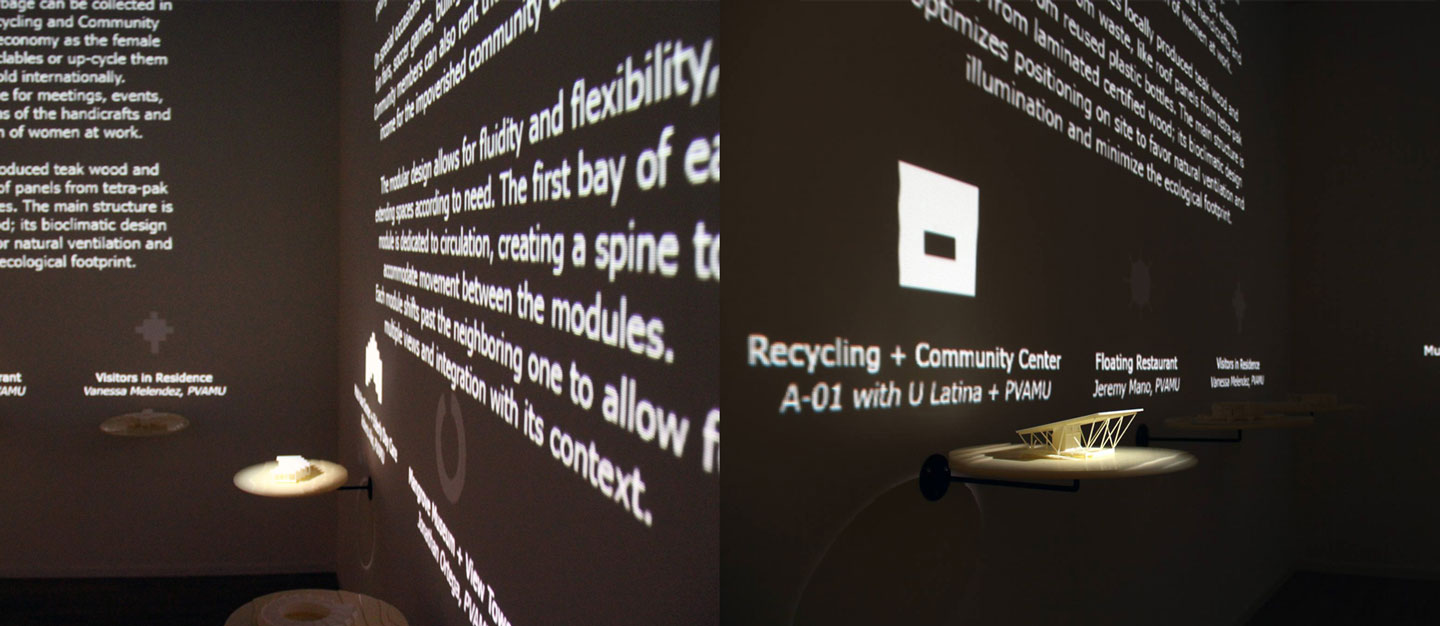
Holding and releasing space to experience time

In 2016, the Chira Project was exhibited at the European Cultural Center in Venice, Italy, which is organized by the Global Arts Affairs Foundation. The exhibition took place as part of the 15th International Architecture Exhibition, La Biennale di Venezia. The guiding theme of this global event was “Reporting from the Front”, which was chosen by the general curator Alejandro Aravena. The curator’s proposal was twofold: “On the one hand, we would like to widen the range of issues to which architecture is expected to respond, adding explicitly to the cultural and artistic dimensions that already belong to our scope, those that are on the social, political, economical and environmental end of the spectrum. On the other hand, we would like to highlight the fact that architecture is called to respond to more than one dimension at a time, integrating a variety of fields instead of choosing one or another.”

The Chira exhibtion in Venice was organized by A-01 in collaboration with the Prairie View School of Architecture (PVAMU). Nine different designs for rural acupunctures were presented altogether. Furthermore, the multi-media exhibition included a series of interviews with key informants in order to illustrate the anthropology of the island.

THE CHIRA PROJECT AT THE EUROPEAN CULTURAL CENTER

Exhibition concept and design:

A-01 - A Company / A Foundation

Oliver Schütte and Marije van Lidth de Jeude with José Pablo González, Luis de la O, Francisco Rodríguez, José Solis, Machiel Crielaard, Lotte Amelink, Gustaaf Dekking

School of Architecture PVAMU

Bill Price - Brown Endowed Chair at the School of Architecture PVAMU with Jordy Matas, Jeremy Mano, Lana Howe, Jonathan Ortega, Vanessa Melendez, Blake Burns, Roberto Murga, Ross Wienert

Interviews: Marije van Lidth de Jeude / A-01
Photography and film: Oliver Schütte / A-01 with Simon Bolivar, Natalia Chaverri, Abraham Soria
Film editing: Marije van Lidth de Jeude / A-01 with Paula Echeverría Cárdenas, Plugin & Fina Estampa Films, and Asociación Semillas (Soren Pessoa)
Models and graphics: PVAMU
Soundscape: La Jauría (Joan Villaperros)
Videomapping: Metamind Visual & Web (Abraham Soria with Vanesa Mata Mata and Fernando Vargas)
Exhibition support: Brown Foundation, PAGE Architects, Roth Construction Inc., BPInc, Brown McGregor Architects, Joe Webb

Collaborators to the project (in alphabetical order): ACTUAR (Association for Rural Tourism in Costa Rica), ADATA (Association of Ladies Working for the Environment), ADI (Community Development Association), Arviveco Studio, ARS Architects and Engineers, CEMEX, CINNO (Veritas Center of Investigation for Innovation), Consost, Dinadeco (National Institution for Community Development), Ethical Forestry, FabLab Costa Rica, Holcim Chair for Sustainable Construction, Hotel Presidente, Maderotec, Ministry of Health, Ministry of Work and Social Security, Novelteak Costa Rica (José María Torra), Reciclarte, Startrash, Tin Jo, UNED (State University at a Distance), UNDP (United Nations Development Programme), Latin University (U Latina), National University - UNA / ECMAR (Grettel Ulate), WWH (NL), XYZ (the many individual contributors to a crowd funding campaign).

With thanks to: Dr. George C. Wright President Dr. Felecia M. Nave Provost and Senior Vice President for Academic Affairs Dr. Lauretta F. Byars Vice President Student Affairs and Institutional Advancement Dr. James A. Wilson, Jr. Associate Provost for Academic Affairs & Director of the Honors Program Dr. Corey Bradford Senior Vice President for Business Affairs Dr. Ikhlas Sabouni Dean, School of Architecture Prairie View & University
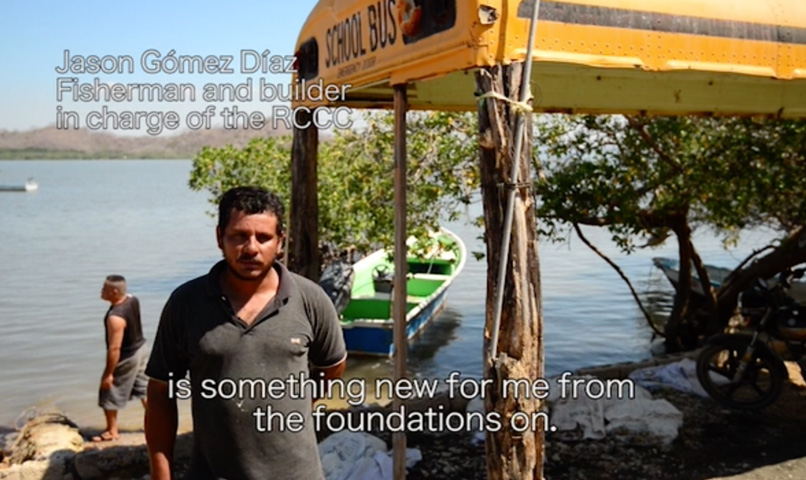
Recycling and Community CenterA-01 with Latin University and PVAMU
An important part of the islands’ garbage can be collected in this new facility. Moreover, the Recycling and Community Center will contribute to the local economy as the female owners can sell the processed recyclables or up-cycle them into handicrafts that will be sold internationally. Additionally, the Center offers space for meetings, events, (environmental) trainings, exhibitions of the handicrafts and a daycare center for the children of women at work.
The Center incorporates locally produced teak wood and elements made from waste, like roof panels from tetra-pak or façades from reused plastic bottles. The main structure is made from laminated certified wood; its bioclimatic design optimizes positioning on site to favor natural ventilation and illumination and minimize the ecological footprint.

There is no garbage collection whatsoever on the island; people burn, bury or trash their waste in nature.
Read MoreClose
Floating Restaurant Jeremy Mano, PVAMU
The floating restaurant exists as a vessel on the waters surrounding Chira Island. A layer of repurposed oil drums buoy the structure above the surface of the water, allowing it to float freely around the islands edges, loosely engaging the shore in a multitude of ways. The mobile nature of the building provides it with an ephemeral quality: always present, but never in the same place.
This restaurant serves both the residents and the visiting tourists. Fresh fish and oysters are pulled from the waters surrounding the island and served in traditional native dishes. In addition to providing food, the floating restaurant also preserves the island’s culture by teaching visitors about the natural migration patterns of aquatic life and the island’s long-standing fishing tradition.

The only restaurant that comes to you.
Read MoreClose
Artists in Residence Vanessa Melendez, PVAMU
This space for artists and investigators allows for the re-interpretation of the existing. Materials that are readily available in nature but often overlooked find new life in the work of the artists. The pieces produced from these materials open up new unrealized potentials for everyday objects that would otherwise be discarded.
The building provides a space for the creation and exhibition of art and research. A central void draws in natural light and allows for rainwater collection. The exterior of the exhibition space is clad in screen walls made from locally found materials that diffuse natural light and obscure the contents of the interior. Separate modules for sleeping, cooking, and a restroom attach themselves to the perimeter of the exhibition space, creating a need to move through the studio and interact with the work as one engages in the patterns of daily life.

The nature and culture of the island appeal to people all over the world.
Read MoreClose
Multi-use Center with Elderly Day Care Roberto Murga Alas, PVAMU
The multi-use center is primarily a place for elderly people to gather for social activities. A link will be made with the recycling and jicaro art centres to make handicrafts for therapeutic purposes and to generate some income. The elderly will be assisted by nurses and young volunteers to stimulate intergenerational interaction.
On special occasions the center will be used for community celebrations, fun fairs, traditional 5-to-5 soccer games, bullfights, workshops or general assemblies. Community members can also rent the space to generate an income for the impoverished community association.
The modular design allows for fluidity and flexibility, extending spaces according to need. The first bay of each module is dedicated to circulation, creating a spine to accommodate movement between the modules. The adjourning modules offer public and private spaces. Each module shifts past the neighboring one to allow for multiple views and integration with its context.

Youth are leaving the island in search of jobs or opportunities to study. The elderly stay behind without much to do, leaving few options to generate an income besides fishing.
Read MoreClose
Mangrove Museum with Panoramic View Tower Jonathan Ortega, PVAMU
The Mangrove Museum serves as an exhibit for the diverse ecosystems supported by this tree species. The museum is composed of a series of modules that spiral upward, starting at the complex root system of the mangrove and rising up to the canopy created by the tree’s leaves. The rising path allows the visitor to experience all of the aspects of the mangrove at eye level. When arriving at the top the visitor has a panoramic view of the impressive Chira Island.
The cladding along the outside of the building works to modulate light and ventilation. The cladding along the inside of the spiraling path provides the visitor with information on the multiple ecosystems created by the different parts of the trees and the wildlife these systems support.

The mangroves form canals that cut through the island turning Chira into a natural counterpart of Venice.
Read MoreClose
Housing for Health Personnel Bill Price, PVAMU
The Housing for Health Personnel is conceived as one cubic volume comprised of twenty-seven cubes. Ten columns support the structure at ground level with three floors stacked above in an effort to minimize the building’s impact on the land. Overhead volumes extend outward to define the entrances to public and commercial spaces on the ground floor while the center core provides vertical circulation to the private areas on the upper levels.
The design utilizes passive strategies to provide thermal comfort. A single volume cantilevers off the south side providing shelter from the rain and sun. The location of the habitable spaces provides for three exterior walls to maximize natural ventilation. Glass and wood jalousies clad the structure, creating opportunities for inhabitants to adjust the building's envelope to respond to a variety of climatic conditions.

You can only get sick on Tuesdays; the only day the health center is open.
Read MoreClose
Jicaro Artisan Center Lana Howe, PVAMU
The Jicaro Artisan Center hovers lightly above the landscape defining a central core that is inwardly focused while still embracing its surroundings. A group of Jicaro trees framed within the courtyard becomes a focal point for detailed study and observation.
While the courtyard is separated spatially from the forest, the structure’s light footprint allows for a blurred distinction between the internal and external. Wooden posts act as tree trunks, suspending the building above the forest floor, allowing the natural ground cover to grow beneath. The roof operates as a canopy, thrusting outward and casting the building in shadow throughout the day.
The main roof slopes down toward the central courtyard, bringing rainwater to the center and creating an intimate relationship with the Jicaro trees. The roof sheltering the veranda at the perimeter projects outward, allowing expansive views of the surrounding forest.

The Jicaro represents the art and nature of the island and helps to create revenue for female artisans.
Read MoreClose
University at a Distance with Fab Lab Blake Burns, PVAMU
With a university degree the youth of Chira will be able to diversify their income from fishing; a necessity now that each year contains a 3-months fishing prohibition period. Other trainings can include English for the artisans and tour guides so they can offer a better service to the tourists and generate more income. The Fab Lab offers the possibility to produce handicrafts in a partially digital and standardized way, assuring a higher and more constant quality.
The building employs a radial planning strategy. An existing tree serves as a focal point at the central courtyard. From there, lines of structure project outward, defining a series of segmented spaces. The roof of the structure slopes down toward the center, creating a close intimate space at the interior courtyard and drawing rainwater for irrigation. The outside edge of the roof projects to the sky, providing expansive views of the surrounding landscape.

Of the 444 households on Chira Island only 76 own a computer and 28 have internet.
Read MoreClose
Floating Fish Market Jordi Matas, PVAMU
The floating fish market brings fishing and tourism together, exploiting agro-tourism by educating tourists on sustainable angling methods and native fish. At the same time, the building serves as a public fish and seafood market where local fisherpersons can clean, purify and sell their produce while parking their boat in a convenient and interactive environment. They can also repair their boats here outside of sales hours.
Integrated into the natural setting of the island the design considers the change between high and low tide as a key element to adjust to varying conditions. The facility offers meeting and office spaces for local Associations of Fisherpersons, emphasizing the importance of their work for community development. Available tourism activities include a hook and line fishing tour, educational lectures on efforts made to preserve marine life by means of responsible fishing, or boat trips to the protected mangrove areas of Chira island.

Artisanal fishing is the islanders’ main source of income.
Read MoreClose